

INSIGHT![]()
Sports field maintenance:
Top 10 most time-consuming tasks
Plus a one-minute tool to calculate how many hours you spend
There are only so many hours in a day. Between preparing grounds for weekend matches, keeping playing surfaces in top condition and managing the constant demands of natural turf, there's always another job on the list.
We've ranked the 10 most time-consuming sportsground maintenance tasks to help you understand where your team's hours go and where you could be working more efficiently.
The rankings draw on time estimates from the Sports Field Management Association (SFMA) and The Football Association (FA). Actual maintenance requirements will vary depending on your grounds, climate, level of use and available equipment.
The 10 most time-consuming maintenance tasks
10. Goals, nets, flags, inspections, and match preparation
8–20 HOURS
Your field isn’t ready until the equipment is in place and safety checks are done.
9. Edging and trimming
8–20 HOURS
Mowing has its limits, so your team has to clean up the areas the mower can’t reach. Edging and trimming eat up hours of time each week.
8. Watering and irrigation maintenance
6–20 HOURS
Automatic irrigation is great, but only if the system works. Someone has to do regular maintenance to ensure that it does.
7. Aeration and decompaction
8–20 HOURS
Fields with heavy use, like those at schools, need more frequent aeration to keep the soil from becoming too compacted.
6. Debris removal and surface grooming
10–25 HOURS
The team must keep the field clear. These tasks alone can take several workdays each year.
Calculate your line marking hours
How long does it take you to mark your sports fields? Count the whole job — mixing paint, travelling between fields and cleaning the equipment afterwards.
0 hours per season spent marking by hand
How we work this out
total hours =
(hours × people × full field markings)
+ (hours × people × re-markings)
That's all that goes into the calculation. We ask for your actual hours rather than field sizes or metres of line marking, so there are no hidden assumptions about field dimensions.
The same hours, another way
- Working weeks
- Share of a full-time working year
Where the starting figures come from
The calculator starts with a sports ground containing three 11-a-side football fields, using our measured marking times below. By default, the re-marking time is estimated at one-sixth of the initial marking time. Actual times vary by sport and field, so adjusting the initial time also adjusts the re-marking time until you enter your own figure. The working-year default is based on 38 hours a week over 44 weeks.
| Sport | Initial marking | Re-marking |
|---|---|---|
| Football (11-a-side) | 6 hrs | 1 hr |
| AFL (Australian rules football) | 4.8 hrs | 1 hr |
| Cricket | 2.5 hrs | 0.5 hrs |
| Men's lacrosse | 4 hrs | 1 hr |
| Women's lacrosse | 4 hrs | 1.1 hrs |
| Athletics, 400 m track | 30 hrs | 5 hrs |
| Rugby | 6 hrs | 1.5 hrs |
Initial marking times assume a team of two setting out and marking the field.
What often gets left out
- Mixing paint and filling the line marking machine
- Cleaning the machine and nozzles afterwards
- Travelling between sports grounds
- Measuring, string lines and pegs for the initial marking
- Re-marking after rain or to fix a crooked line
- Waiting for the field to dry before marking
Which robot is right for you?
5. Fertilising and weed, disease, and pest control
10–30 HOURS
Fertiliser, fungicide, herbicide, and other treatments all take time. These tasks vary by the field and microclimate, but the average is about 26 hours.
4. Divots, goalmouths, and worn areas
20–40 HOURS
It’s recommended to spend at least 15 minutes after each match on divots and worn areas. That’s 30 minutes right there. Over the course of the season, that adds up to about 20-25 hours.
3. End-of-season renovations
25–40 HOURS
Topdressing, scarifying, and overseeding don’t happen often. But they’re time-consuming. The SFMA estimates that topdressing and overseeding an average football field takes about a week’s work, roughly 36 hours.
2. Line marking, measuring, and re-marking
30–65 HOURS
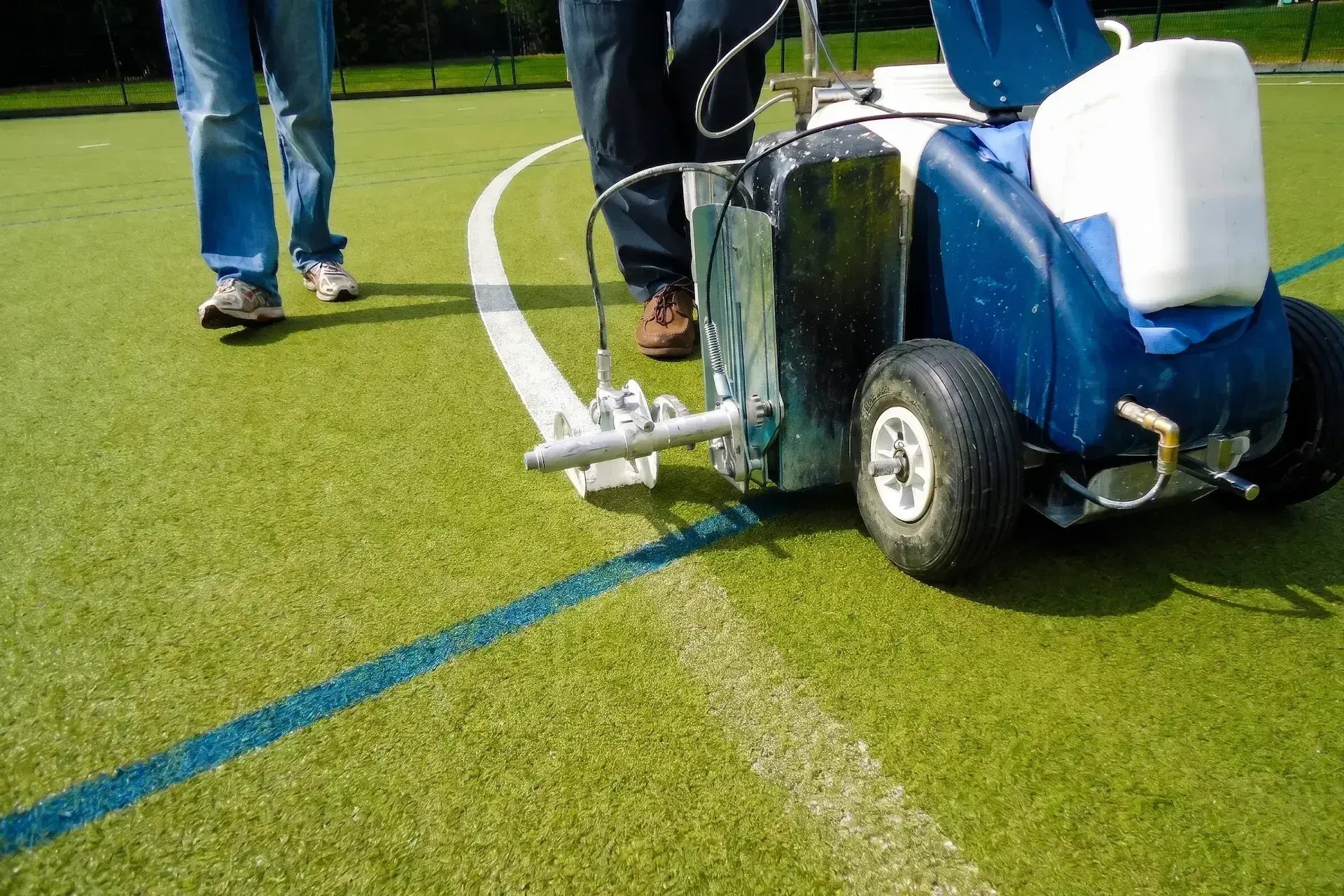
Marking a sports field is incredibly time-consuming. For the initial marking, it takes many hours to measure out the field with a measuring tape and string. And the field has to be re-marked throughout the season due to weather and normal wear and tear. Some crews also re-mark the lines simply to avoid having to measure the field again.
1. Mowing
50–120 HOURS PER YEAR
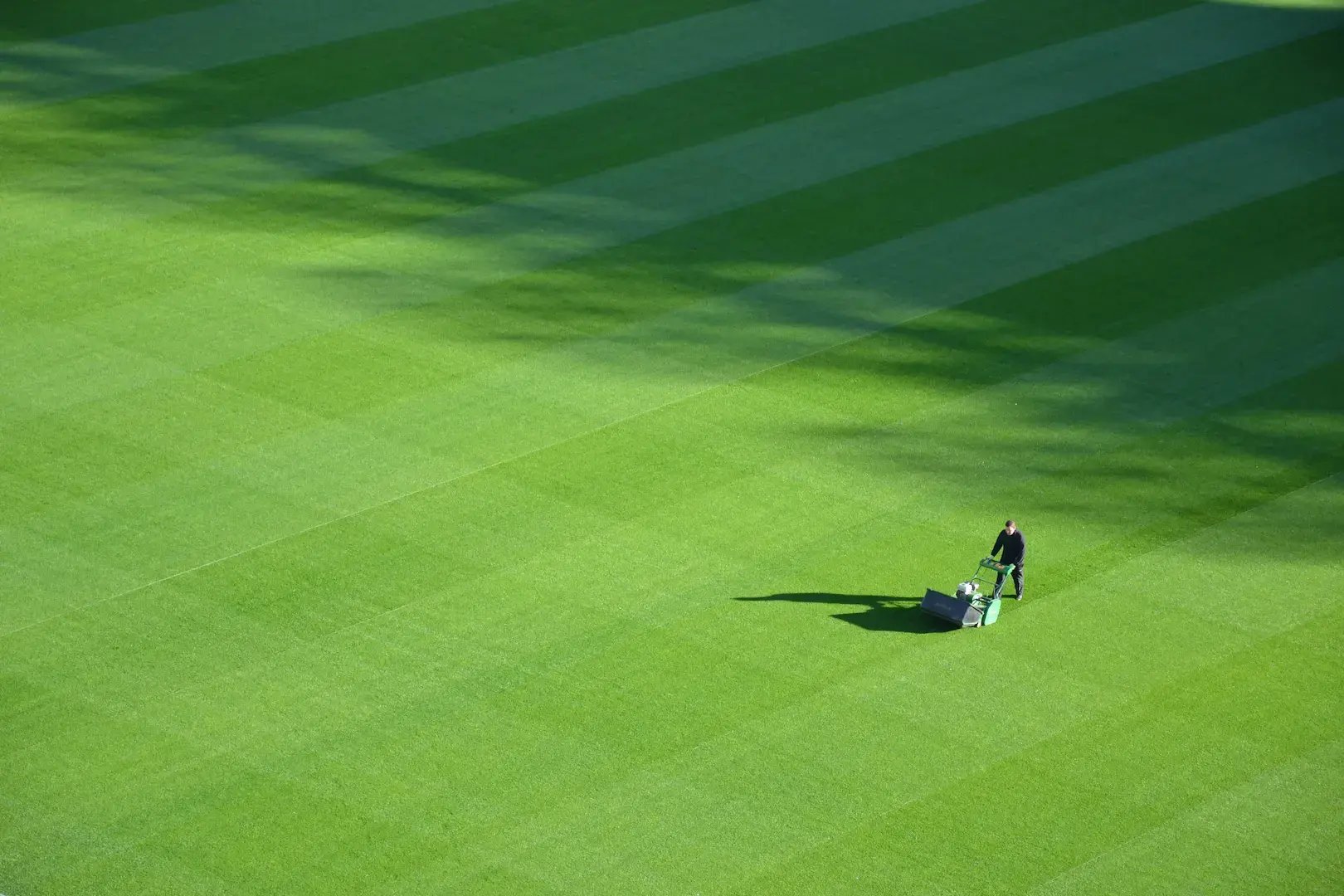
Mowing takes up more time than any other task. The SFMA estimates close to 113 hours per year, assuming your crew mows about 50 times per season.
Which hours can you get back?
We did the hard work for you. Now that you know how much time your crew spends on maintenance, you can figure out how to make it easier. Ask one simple question. Which tasks will deliver the greatest time savings?
These jobs aren't optional, and deferred maintenance isn’t the answer. Instead, improve the process. Automated line marking takes one of the most time-consuming tasks off the list.
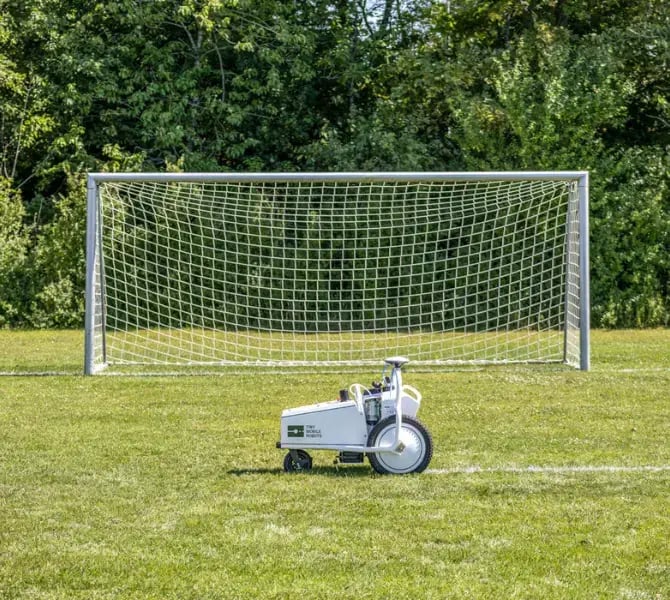
GPS-guided robotic line markers store field layouts and reproduce them with the touch of a button. No more tape measures and string lines. No need to recreate the field layout every time. While the robot paints, staff can handle other maintenance work. The workload will be the same. The difference is that automating some tasks gives your crew more time to get it all done.
GET IN TOUCH![]()
In doubt about your needs?
Request a call and talk with one of our line marking experts about how to optimise your field maintenance.
More Articles
INSIGHT
![]()
7 Line-Marking Robot Myths That Could Cost You Time & Money
When you're buying an autonomous line-marking robot, you'll hear a lot of claims. We break them down here.
INSIGHT
![]()
7 Line-Marking Robot Myths That Could Cost You Time & Money
When you're buying an autonomous line-marking robot, you'll hear a lot of claims. We break them down here.
INSIGHT
![]()
7 Line-Marking Robot Myths That Could Cost You Time & Money
When you're buying an autonomous line-marking robot, you'll hear a lot of claims. We break them down here.